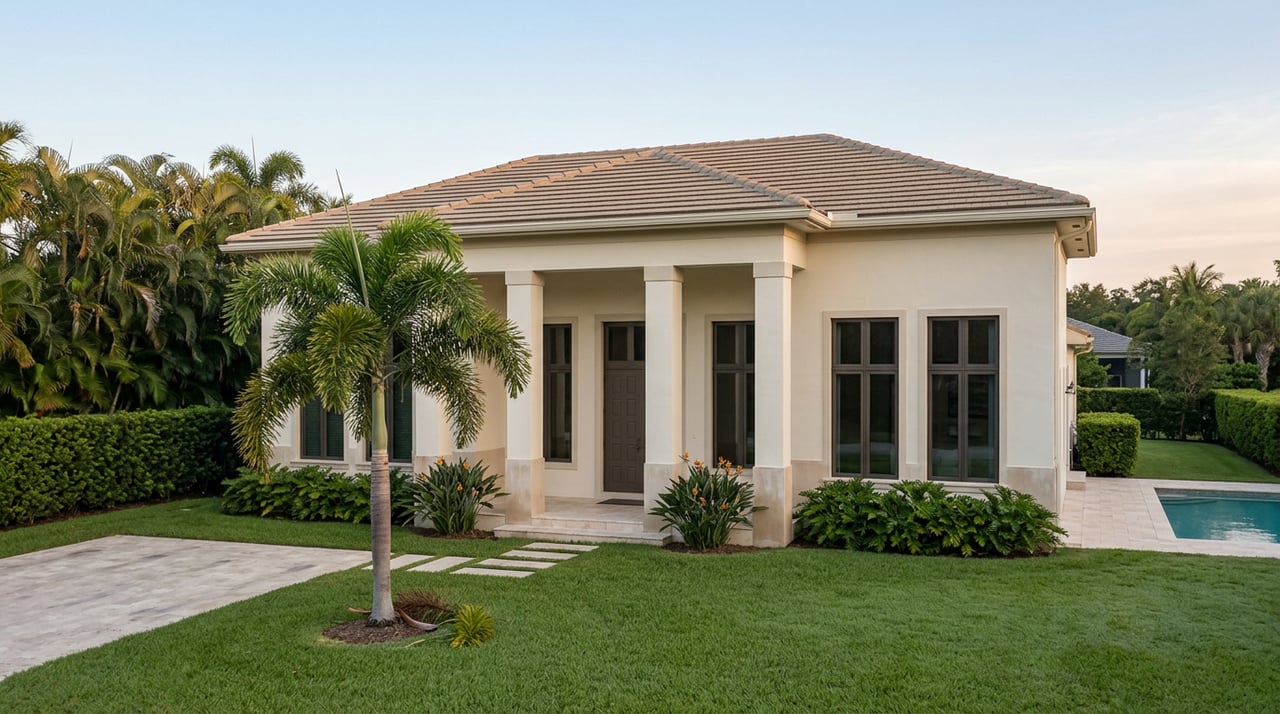
A resale seller in St. Lucie West lists a well-kept three-bedroom at what the neighborhood comps suggest. The listing gets showings. It does not get offers. Three miles away, a builder is closing a nearly identical floor plan with a rate buydown and a closing-cost credit the private seller cannot match dollar for dollar. The seller assumes the market slowed down. What actually happened is that they got compared to a builder, not a neighbor, and builders play by different rules.
That distinction matters more in Port St. Lucie than in most Treasure Coast cities, because of how much unbuilt inventory is still working its way through the pipeline. City planning materials published earlier this year put the number of housing units already approved but not yet built at roughly 36,450, as of February 2026. That is not a backlog that clears in a season. It is a standing supply of future competition that resale sellers are up against for years, not months.
The median you see on a portal is an average of two markets
Depending on which source and which three-month window you check, Port St. Lucie's citywide median sale price this year has landed anywhere from the high $370,000s to around $410,000, with the most recent readings through August 2026 sitting near $405,000. The spread between sources is not a data error. It is a symptom of the real story: that single median number is blending two markets that do not compete on the same terms.
West of I-95, in Tradition and St. Lucie West, prices routinely run north of $450,000. These are the master-planned corridors where builders are actively selling, and where amenities, new schools, and walkable town centers pull buyers who are comparing Port St. Lucie to the rest of the Treasure Coast rather than to itself. East of that line, in older, non-HOA neighborhoods like Torino, Sandpiper Bay, and Southbend Lakes, prices sit meaningfully lower, lot sizes tend to be larger, and buyers are often trading community amenities for acreage, waterfront access, or room for a boat and an RV.
Average those two markets together and you get a citywide figure that describes neither one accurately. A seller in an older east-side neighborhood who prices off the citywide median is leaving money on the table. A buyer comparing a Tradition new build to that same citywide median will misjudge how much of a premium they are actually paying for the master-planned lifestyle.
What builders are offering that a private seller cannot
As of mid-June 2026, active new-construction inventory in Port St. Lucie spanned roughly 63 homes across 11 communities, priced from about $359,775 up to $1.74 million, built by Lennar, Meritage Homes, Pulte Homes, and Taylor Morrison. Communities like Esplanade at Tradition and Glynlea Country Club were both actively selling new homes in that window, alongside established active-adult options such as Del Webb at Tradition, Telaro at Tradition, Vitalia at Tradition, Catalina Palms, Kings Isle, Cascades at St. Lucie West, and the Valencia neighborhoods within Riverland.
A homeowner selling a resale property is not just competing with the house down the street. In western Port St. Lucie, they are competing with a builder's finance department.
Builders rarely cut the sticker price on a home. Instead they offer flex cash toward closing costs, rate buydowns through an in-house lender, and design packages that a private seller has no equivalent way to structure. A resale seller can drop the asking price, but a builder can make the effective monthly payment lower without ever changing the price on the sign. For a buyer comparing two similar homes side by side, that difference in financing terms often outweighs a modest gap in listed price.
The fee that doesn't show up in the sale price at all
Here is the part that catches buyers off guard after closing, not before. Many of the same master-planned communities offering the newest inventory, including those in Tradition, layer a Community Development District fee on top of regular HOA dues. CDD fees in these communities typically run $1,500 to $3,500 a year, billed through the property tax bill rather than as a monthly line item, which is why they are easy to miss when comparing a spreadsheet of sale prices. HOA dues themselves vary just as widely, from nothing at all in older east-side, non-HOA neighborhoods up to $300 or more a month in gated golf communities.
Put two homes side by side, a $420,000 resale with no HOA or CDD and a $415,000 new build in a CDD community with a $250 monthly HOA, and the sticker prices look nearly identical. The actual monthly cost of ownership is not. A buyer who only compares sale price is comparing the wrong number. A seller trying to explain to a buyer why their non-HOA home is worth a premium over a similarly priced new build needs to make that monthly cost math explicit, because the portal listing will not do it for them.
Why this looks structural rather than seasonal
Florida real estate cycles usually correct with the calendar. Inventory tightens in winter as northern buyers arrive, loosens again by late summer. What is happening in Port St. Lucie right now does not fit that pattern as cleanly, because the approved-unbuilt pipeline is large enough that builders can keep releasing new inventory regardless of season. Days on market across the city sat around 86 days as of August 2026, and the sale-to-list ratio hovered in the 96 to 97 percent range, both signs of a market that has settled into balance rather than a market waiting for a seasonal correction to snap back.
That distinction changes the advice. A resale seller who prices high and waits for the winter buyer surge to bail them out is betting on a mechanism that may not be doing the heavy lifting it once did. The competition from new construction does not disappear when the snowbirds arrive. It is simply always there, west of I-95, with financing terms a private seller cannot replicate.
What this actually means if you are buying or selling here
If you are selling a resale home west of I-95, know your real competition before you set a price. It is not only the last three homes that sold in your subdivision. It is what a builder three miles away is currently offering in incentives, because that is often the alternative your buyer is cross-shopping.
If you are buying, run the full monthly number, not just the sale price, before comparing a CDD community to a non-CDD one. A lower HOA and no CDD fee can make an older, non-gated neighborhood the better financial choice even when the sale price looks higher on paper.
If you already own in one of the older, non-HOA pockets like Torino, Sandpiper Bay, or Southbend Lakes, understand that your home is not competing in the same lane as new construction at all. Comps from Tradition or St. Lucie West will not tell you much about your own market position, and neither will a citywide median that blends both.
A few questions worth settling before you act
Is Tradition actually part of Port St. Lucie, or a separate town? Tradition is a master-planned area within the city of Port St. Lucie, though it markets and is often searched for as its own distinct place because of its town square, hospital, and cohesive community design.
Are the older 55-plus communities cheaper than the newer ones? Often, yes. Established communities tend to price below the newest construction phases, though the gap depends heavily on the specific home, its upgrades, and what inventory happens to be active at the time.
Does a CDD fee ever go away? CDD bonds are typically paid down over a set term and can decrease or retire over time, but they do not disappear the moment you close. Ask for the current amortization schedule on any CDD-backed community before you buy.
Port St. Lucie's market rewards buyers and sellers who look past the single headline number and understand which of the city's two markets they are actually operating in. If you want a property-specific read on where your home or your target neighborhood falls in that split, Jill McCarthy Thogersen can walk through the comparison with you. Request a free home valuation or schedule a market consultation to get a number that actually reflects your corner of Port St. Lucie, not the citywide average.